



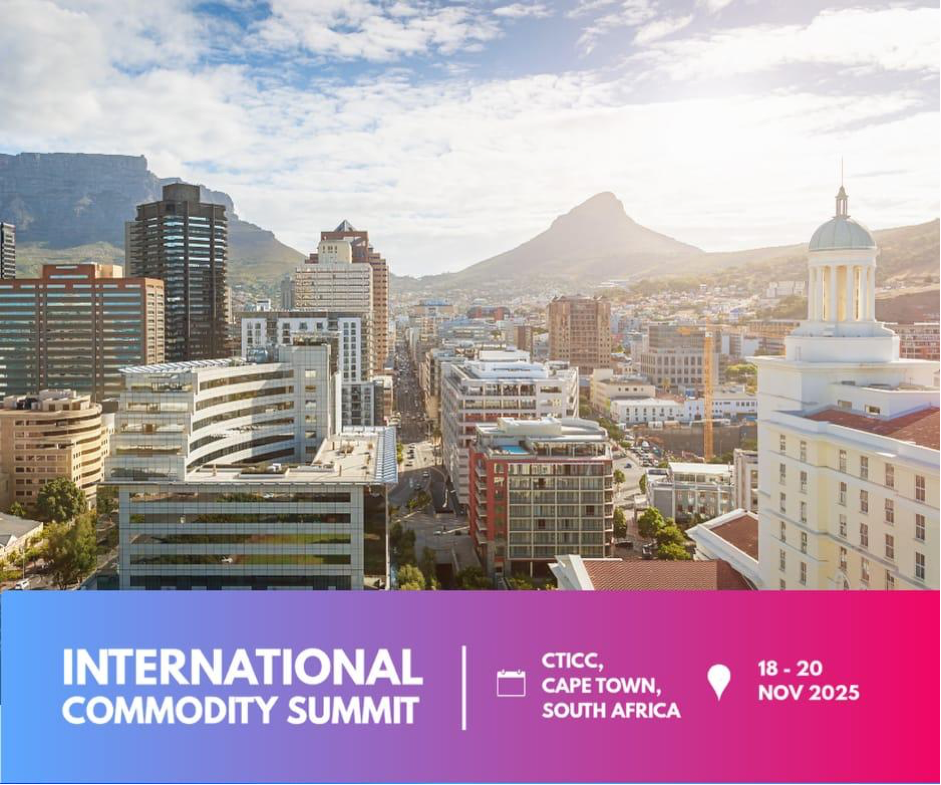
Cape Town, South Africa, August 2025 – With mining now responsible for more than 60% of the continent’s total commodity exports and more than half of South Africa’s raw material commerce, Africa is quickly becoming a global commodity powerhouse. Four essential minerals, platinum, cobalt, gold, and lithium, found in enormous amounts throughout Africa are at the heart of this expansion. These resources are essential for propelling the global transition to smarter, cleaner technology, such as renewable energy sources and batteries for electric vehicles.
Africa possesses approximately 80% of the world’s platinum reserves, 60% of cobalt, 40% of gold, and 30% of lithium, making it a vital supplier for industries powering the 21st century. However, much of these minerals are still exported in raw form, missing the chance to benefit from processing and value addition.
“Africa has the minerals the world needs, but unless we start adding value and trading smarter, we’ll continue to export wealth instead of building it. ICS2025 is our opportunity to change that, ” said Anje Kruger, CEO of Hibarri.
ICS2025: A Strategic Response Aligned with G20 Objectives
While South Africa prepares to host the G20 Ministerial Symposium in Sandton, the International Commodity Summit 2025 (ICS2025), set for Cape Town, November 18th onward offers delegates and international G20 attendees the opportunity to witness the emergence of Southern-African as the catalyst of the commodity sector’s sovereignty.
This multi-sector, transaction-focused conference will convene top players across mining, energy, agriculture, chemicals, and textiles to foster trade outcomes, investment deals, infrastructure partnerships, and export growth.
ICS2025 will provide previously unheard-of access to government stakeholders, international buyers, technology suppliers, and financing sources throughout the whole value chain, as Africa strives to become the world’s largest commodity trading hub.
“Hibarri has positioned itself as a catalyst to spur on the continent’s strategic response. ICS2025 aims to position Africa as the world’s largest commodity trading hub by connecting government officials, buyers, technology providers, and financiers across the entire value chain”, said Cherrylee Samson, Vice President of Hibarri.
This summit will convene together leaders from mining, energy, agriculture, chemicals, and textiles to forge investment deals, trade partnerships, and infrastructure projects that align with G20 objectives.
A Platform for Action: What ICS2025 Delivers
ICS2025 offers miners access to purchasers of semi-processed and raw minerals, project financiers, tech innovators, and regulators who provide incentives for exploration and licensing. With the global surge in demand for battery and energy metals, attendees can expect opportunities for:
- Off-take agreements,
- Joint ventures,
- export contracts,
- Advancements in safety and processes
ICS2025 is a crucial entry point for farmers and agro exporters to connect with worldwide food buyers, logistics partners, and seed tech companies. Agro-processing finance, compliance certification, and intra-African trade mechanisms like PAPSS and AfCFTA will all be covered in the sessions.
The summit’s activities for chemical, textile, and energy operators include:
• Supply chain integration.
• Infrastructure funding panels.
• Trade sessions for fertilizer and feedstock.
• Renewable energy auctions and regulatory workshops
“ A “talk shop” is not what this is. Every breakout space and booth at ICS2025 is designed to encourage transactional interaction”, said Samson.
Limited-Time Free Access for African Exporters
While passes for global participants range between $450–$500, African miners, energy traders, and SME exporters can still register for free, thanks to ICS2025’s pan-African trade inclusion program.
This approach acknowledges that Africa’s commodity future is not just about reserves; it’s about people. From smallholder farmers and junior miners to engineers and trade agents, ICS2025 aims to connect, uplift, and finance the next generation of Africa’s economic drivers.
The summit offers tangible opportunities for miners seeking off-take agreements, joint ventures, and export contracts, while also supporting farmers and agro-exporters with access to logistics partners and compliance resources. Additionally, chemical, textile, and energy sectors will benefit from panels on supply chain integration, infrastructure financing, and renewable energy regulations. ICS2025 is designed as a platform for action, emphasizing real transactions over discussion.
Why ICS2025 Stands Apart from the G20 Summit
Unlike the G20 Summit, which is a high-level political forum primarily focused on macroeconomic policy, global finance, and geopolitical coordination among the world’s largest economies, the International Commodity Summit 2025 (ICS2025) is a sector-specific platform dedicated to the real-world challenges and opportunities within Africa’s commodities ecosystem.
ICS2025 will unite key players from the energy, mining, metals, and agricultural sectors to tackle supply chain vulnerabilities, rising tariffs, resource nationalism, and climate-driven market volatility head-on. By centering its agenda on actionable industry strategies—such as boosting refining capacity, securing sustainable investment, and strengthening intra-African trade; ICS2025 moves beyond political dialogue to foster tangible commercial outcomes, positioning it as a more hands-on and industry-focused counterpart to the G20.
To address supply chain vulnerabilities, rising tariffs, resource nationalism, and market instability caused by climate change, ICS2025 will bring together important participants from mining, energy, metals, and agriculture sectors. As a more practical and industry-focused alternative to the G20, ICS2025 goes beyond political discourse to promote observable commercial results by focusing its agenda on doable industry strategies, such as increasing refining capacity, attracting sustainable investment, and bolstering intra-Africa trade.