



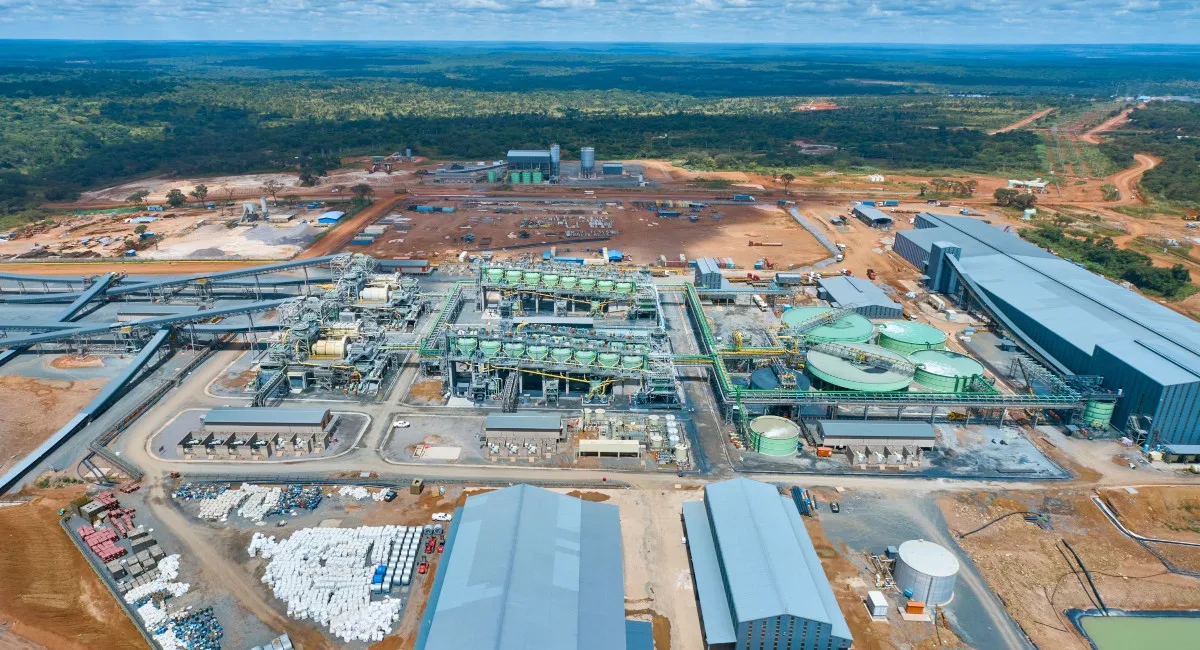
Copper production is rising across the Central African Copperbelt. The bigger question is whether the region can turn that growth into local value, stronger supply chains and industrial development.
Ivanhoe Mines’ Kamoa-Kakula operation in the Democratic Republic of the Congo (DRC) produced 76,401 tonnes of saleable copper products in Q3 2026, up approximately 19% quarter on quarter.
The increase comes as global demand for copper grows, driven by electrification, renewable energy, electric vehicles, data infrastructure and expanding power networks. The International Copper Study Group expects refined copper usage to grow by 1.5% in 2026 and 2.5% in 2027.
For the DRC and wider Copperbelt, the opportunity is clear: produce more copper but capture more of its value.
From copper production to economic value
Sustaining production growth will require continued investment in exploration, mine development and infrastructure.
For Ivanhoe, its partnership with the Qatar Investment Authority (QIA) demonstrates the role of long-term investment in developing future mining opportunities.
“We are excited to build this long-term, world-class alliance as we unlock new untapped potential in our hunt for the next generation of great discoveries, which we will sustainably mine together,” says Ivanhoe CEO Marna Cloete.
But the value opportunity extends throughout the value chain. Processing, refining and manufacturing can create new businesses, jobs and skills while strengthening the region’s position in global supply chains.
In Zambia, government efforts to restrict exports of unprocessed copper are aimed at encouraging greater domestic processing and manufacturing. Discussions with companies such as China’s Wuxi Jiangnan Cable point to the potential for copper to feed local production of electrical cables and industrial components.
In the DRC, state-owned miner Gécamines and commodities trader Mercuria have partnered to strengthen copper and cobalt trading capabilities and market access, demonstrating another route to retaining more value within the country.
Infrastructure will determine what comes next
Turning these ambitions into commercial reality will depend heavily on infrastructure.
The planned $300 million Kalumbila–Kolwezi Interconnector Project will connect Zambia and the DRC through a proposed 200-km power line, highlighting the importance of cross-border energy infrastructure to mining and industrial development.
At Kamoa-Kakula, a renewable energy agreement with Green World Energie is expected to increase renewable baseload power to 60 MW, with plans to double this within 18 months.
Meanwhile, Barrick’s Lumwana Super Pit expansion demonstrates the scale of investment flowing into Zambia’s copper sector, while the Lobito and Nacala corridors are improving connections between mineral-producing regions, ports and markets.
These projects address different bottlenecks but share a common requirement: partnerships that move infrastructure from ambition to delivery.
Building regional value chains
The DRC and Zambia’s copper and cobalt resources provide a strong foundation for developing regional battery, manufacturing and other downstream industries.
Research by the International Institute for Sustainable Development highlights the potential to connect the Copperbelt’s mineral resources with downstream industries. But resources alone will not build competitive value chains. Investment, reliable energy, transport, skills, technology and access to markets must come together.
Zeinab El-Sayed, Director of Government and Institutional Partnerships at Mining Indaba, said:
“Africa’s mineral wealth will only deliver lasting economic value if governments create the conditions for industry and investors to build competitive value chains around it. That means moving from resource extraction to regional processing, manufacturing and trade, and building the partnerships and infrastructure needed to make that shift commercially viable.”
The challenge is to align government policy with private investment and regional infrastructure, while connecting producers with downstream industrial buyers. For the Copperbelt, the opportunity is to turn rising mineral production into stronger regional industries, greater economic participation and more value retained locally.
Partnerships that deliver
The question is no longer simply how much copper Central Africa can produce. It is whether the region can build the infrastructure, industries and commercial partnerships needed to capture more of its value.
Laura Nicholson, Industry Director at Mining Indaba, said: “Demand is rising, but there are questions around supply, and whether Africa’s value chains can come on stream fast enough.”
These issues will be explored at Investing in African Mining Indaba 2027 through sessions including What Will Trigger the Next Copper Super Cycle?, How Are Governments Redefining the Value of Their Mineral Resources? and Building Advantage: Enabling Infrastructure for Industrial Value Chains.
Central Africa has the copper. The next test is whether partnerships can turn rising production into lasting economic value.
Investing in African Mining Indaba 2027 takes place from 8–11 February 2027 at the Cape Town International Convention Centre (CTICC), under the theme “Stronger Together: Partnerships in Practice.”
For media queries: Glenda Zvenyika
Senior Account Manager
+27 79 629 6521
