



A grassroots recycling programme featuring a giant wire fish – which is cutting school litter by 75% and more – is becoming a primary entry point for cleaning up communities across South Africa.
Currently in its launch phase, Munch-on-the-Move is gaining traction countrywide, with rollout in eight schools across Cape Town, Durban and Gqeberha. A total of 22 schools are expected to be onboarded by early 2027, and a further 107 schools have been identified nationally as potential expansion sites.
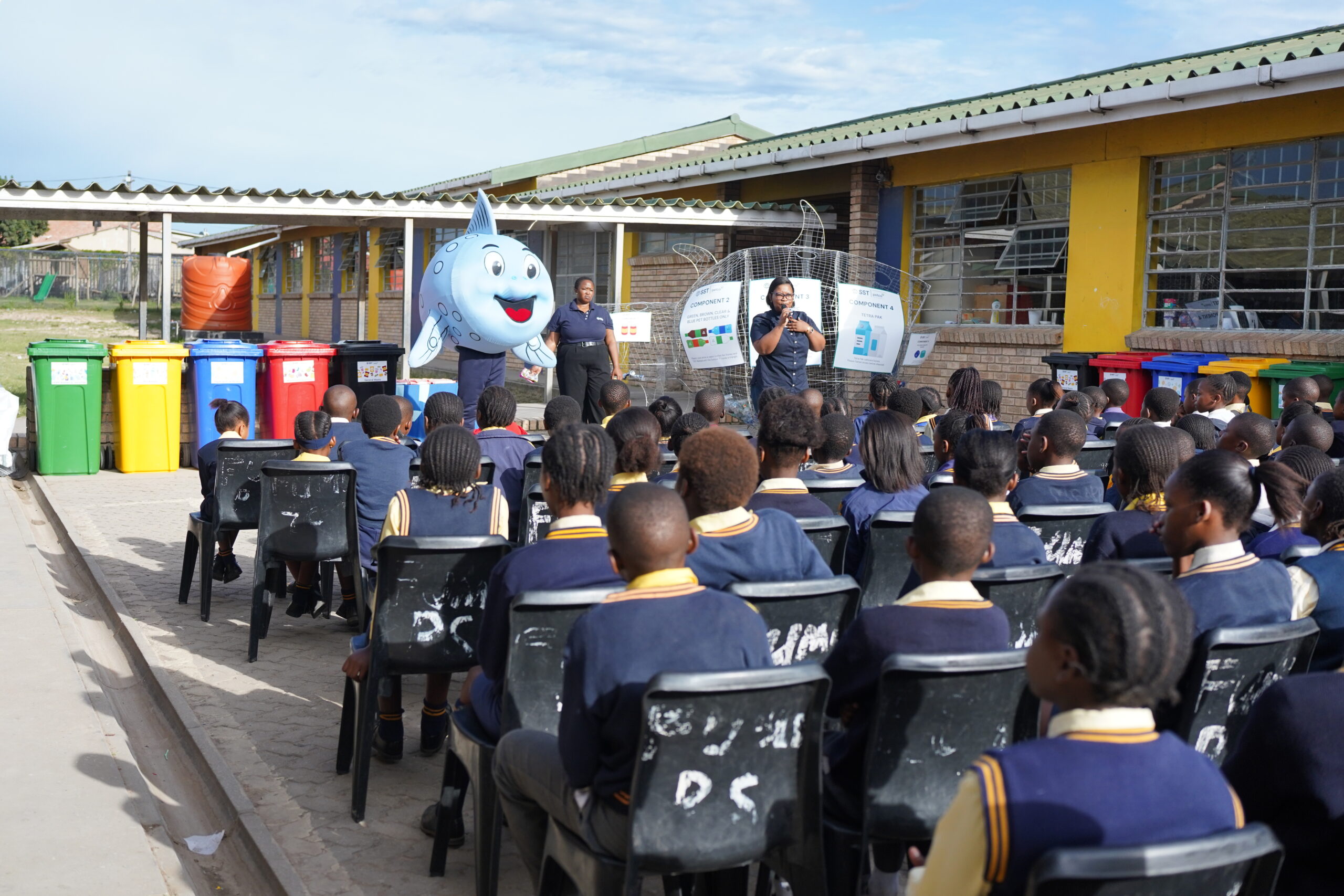
According to Sustainable Seas Trust (SST), the non-profit organisation behind the initiative, the Munch fish is an eye-catching and fun way of encouraging pupils to deal with litter in their environment by separating recyclable materials at source and “feeding” them to Munch, thereby keeping these materials in the value chain.
“It’s a great visible reminder that protecting our marine life and addressing ocean pollution starts with managing our land-based sources of waste,” explained SST’s Operation Clean Spot manager, Carla Kampman.
This engaging approach is already driving measurable behavioural change, with pupils taking full ownership of the recycling system.
Across several pilot schools, Kampman said daily litter accumulation dropped from between 244 and 400 litter items per day during baseline surveys to fewer than 100 items per day after the interventions were implemented. In some cases, daily litter counts decreased by more than 75%, while litter weight reductions of over 50% were recorded at multiple sites.
Kampman said Munch formed part of SST’s flagship Operation Clean Spot programme, which aims to implement systems-based waste solutions across Africa – the second most polluted continent.
“What SST is testing in schools and communities is therefore not just locally relevant. It is foundational to understanding what effective behaviour change and waste recovery systems could look like at scale across the continent.”
When Munch arrived at schools, Kampman said, pupils were first taught how to separate waste correctly.
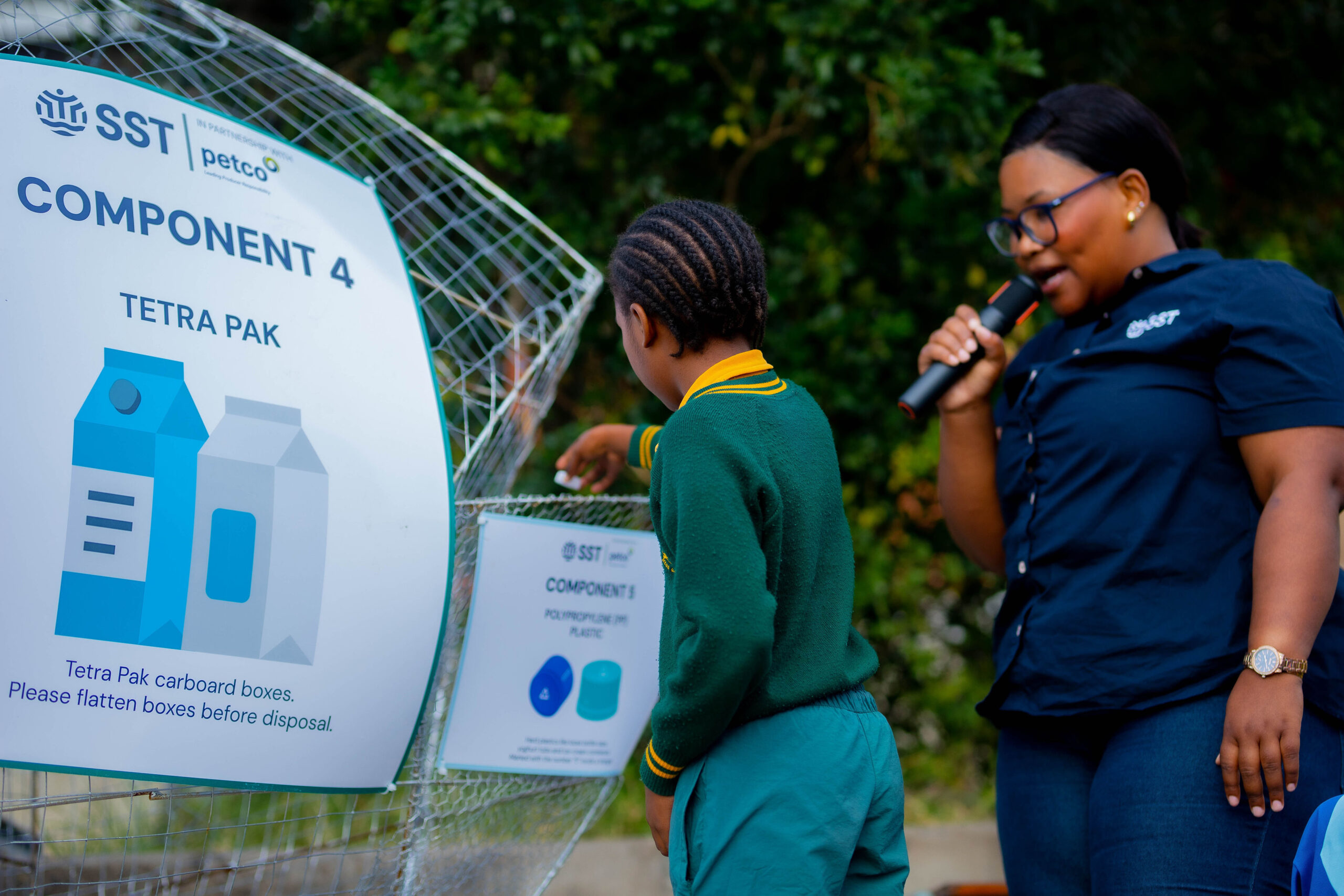
“The different compartments make it easy to sort materials and that waste is then collected and directed into the right recycling streams. What we’re really doing is building habits so that behaviour continues long after the programme moves on.
“Importantly, the impact extends far beyond the school grounds. Each new school introduced to the programme becomes a local hub for awareness, participation, and behaviour change, helping strengthen recycling practices within households and communities while reducing the likelihood of recyclable waste leaking into rivers and the ocean.”
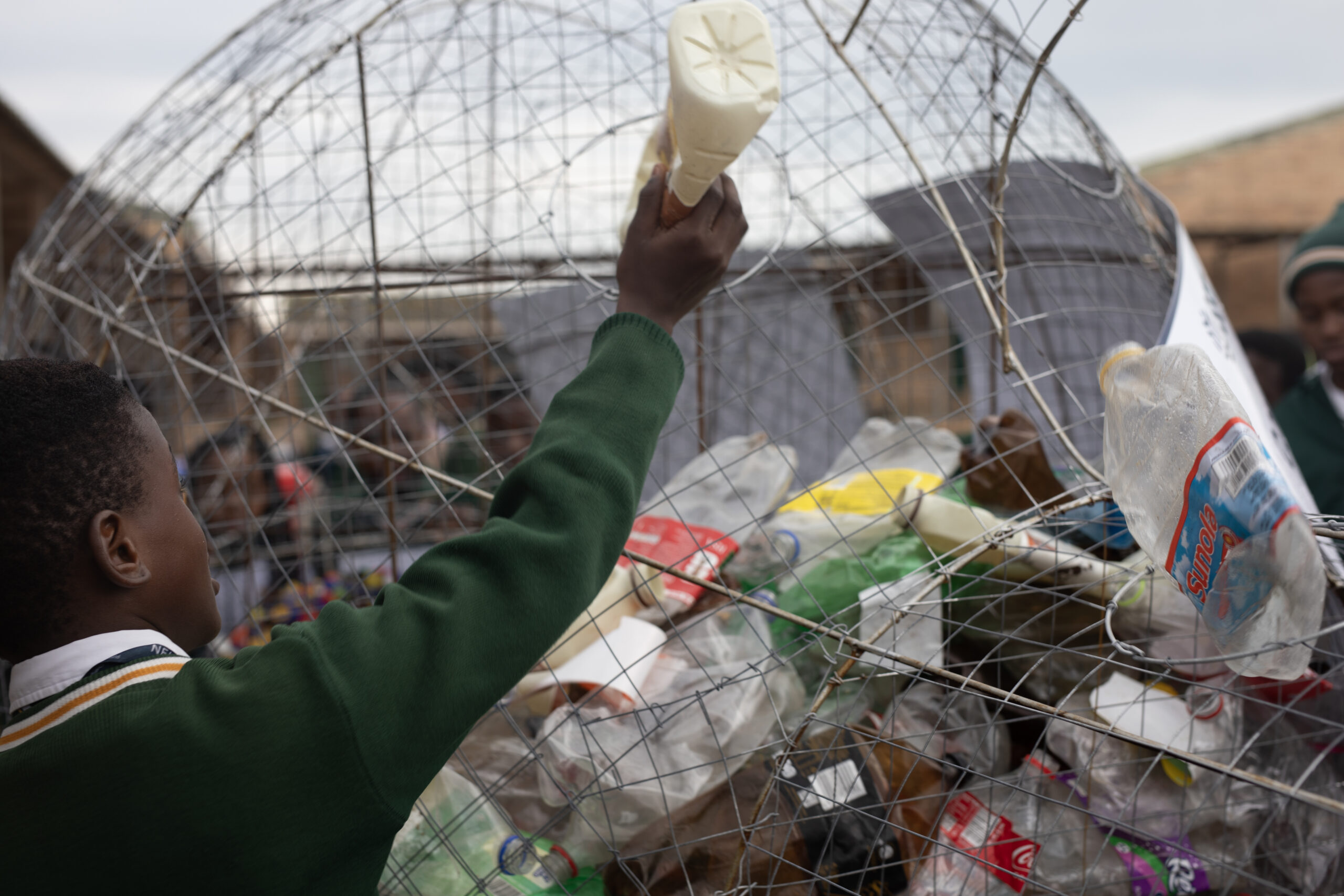
At Christmas Tinto Primary School in Strand, Cape Town, teacher Bolekwa Malangeni said Munch had already begun to have an impact on the wider community, with pupils educating their families about responsible waste management and getting their households involved in collecting recyclable materials.
“What is good about it is getting pupils involved, teaching them about recycling, the importance of recycling, and keeping our school clean, not just the school, but also outside it,” said Malangeni.
In Gqeberha, teacher Mihlali Pasiwe agreed that the project would help to address the problem of environmental waste at Fumisikoma Primary School, and also in the surrounding areas.
“Because we are surrounded by informal settlements, these residents don’t have access to municipal services. They don’t know where to dump their waste, so it ends up everywhere,” Pasiwe said.
“Even in the classroom context, if there are papers on the floor, you need to tell the pupils to pick them up. It doesn’t come naturally to them. This project will definitely educate them on how to deal with waste, and also benefit the community and help them understand.” Kampman said participating schools were supported with free curriculum-aligned educational resources for Grade R to Grade 12, along with a recycling station and general waste bin for items not fed to Munch, as well as practical guidance onimplementing recycling and awareness activities in ways that were locally appropriate and achievable.
“SST also helps connect schools with collection partners and recycling networks to ensure that recyclable materials are properly recovered and reintegrated into the circular economy.”
Kampman said one of the strongest findings from the pilot was that long-term environmental impact depended not only on awareness, but on strengthening the broader waste and recycling ecosystem around communities.
“Ultimately, what happens in a single school is part of something much larger. Each pupil who begins to see waste differently becomes part of a wider network of change, influencing households, strengthening community practices, and contributing to a broader shift in how waste is understood, valued, and managed across Africa.”
SST has also launched a GivenGain fundraising campaign in an effort to support its rollout of the Munch project. It can be viewed at this link: https://www.givengain.com/campaign/become-an-ocean-guardian.
To find out more or get involved, schools, businesses, and parents can contact SST at info@sst.org.za
Watch the 3-min YouTube video: here
